Jerry and FIP
Three months after adopting my cat, he was showing lethargy and severe bloating. The doctor said it was fatal: FIP.
In November 2022, I adopted Jerry. My wife already had her cat Ruby from before we moved in together, and I was jealous and wanted a cat to call mine. Jerry was incredibly affectionate, and loves to rub his face against yours.
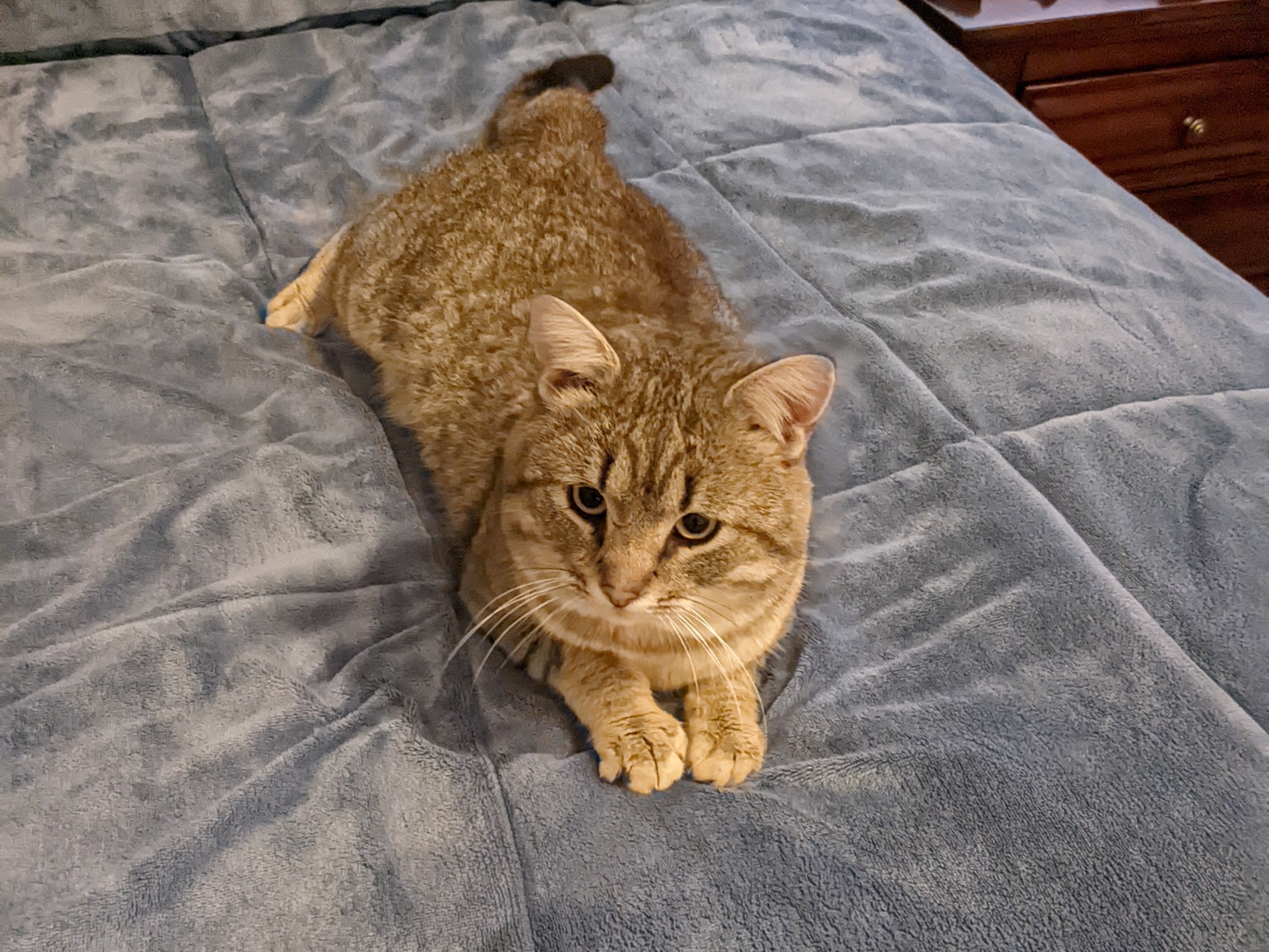
Jerry and Ruby did not get along. The primary cause of this was likely Jerry's manhood. Somehow, the Humane Society handed this cat to me without being neutered. Even after the procedure, the cats still did not get along. Jerry had not made a good impression. Luckily, sometime in late January, they were able to be in the same room together, without it escalating into a chase.
Symptoms
After returning from a trip in early March 2023, I started to notice a change in Jerry's behavior. Generally, he was a little slower to move; a little more tired.
What was most bizarre was that Jerry no longer wanted to jump off the bed. Getting up or down from places was difficult. I attributed this to a physical injury: I recalled accidentally stepping on the guy's foot a few weeks earlier. I built a little staircase out of boxes and a chair so he could still sleep with me at night in bed.
After a few weeks, he wasn't getting any more active. I started to be worried, but I was convinced it was his foot.
One Thursday evening I looked down at Jerry, and it just occurred to me: he's bloated. This isn't just overfed-big. His belly is incredibly round.
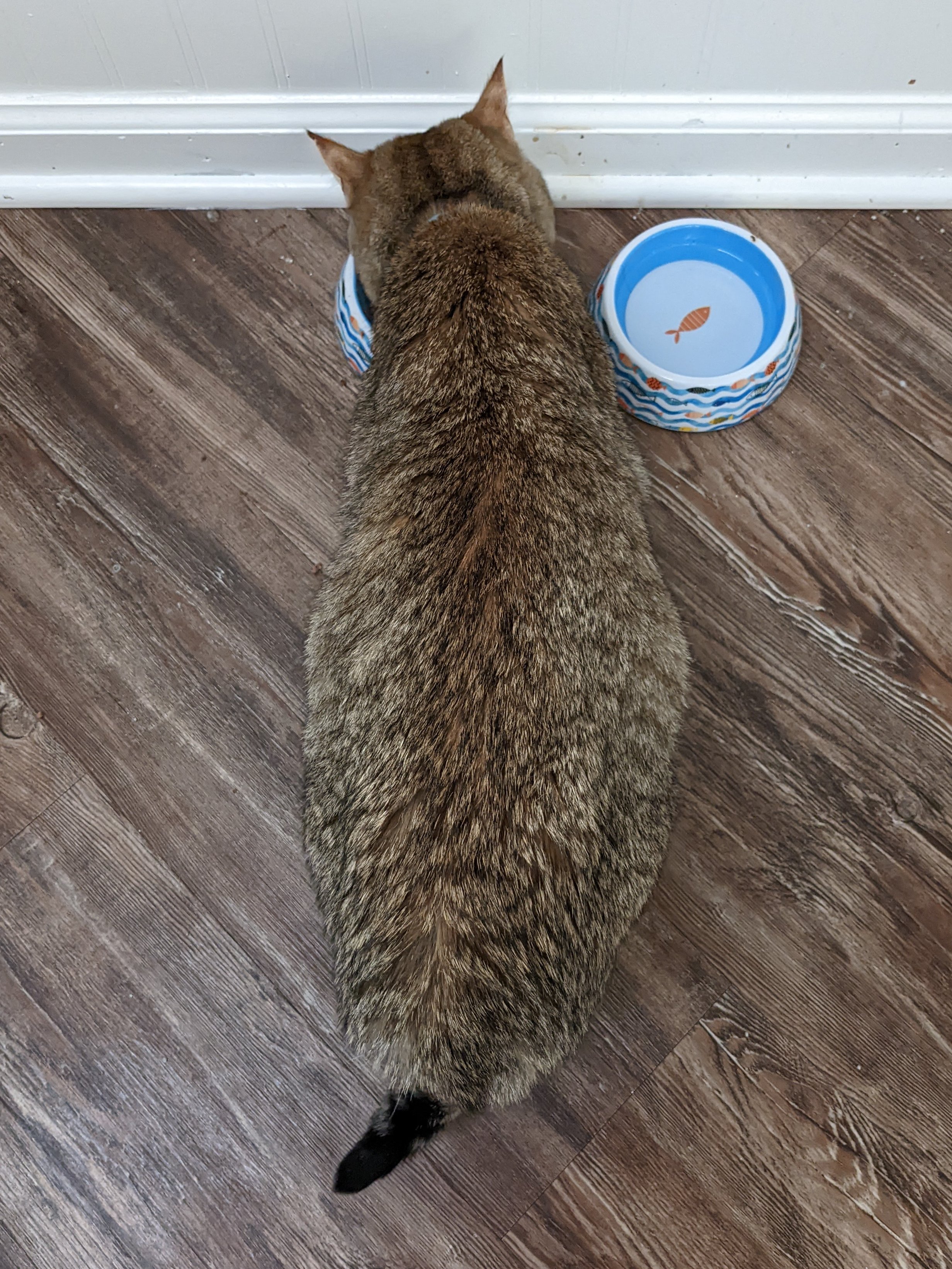
After expressing my concerns for Jerry to my wife, we decided that we shouldn't wait or schedule an appointment. That evening we were going straight to the emergency vet. And I'm so grateful we did.
Diagnosis
I had taken Jerry to this emergency vet previously. A week after I got him he had a cold. After a sneezing fit with bloody discharge, I got worried. When I brought him in, I think the person at the counter knew this was likely a cold. Without much urgency I was waited on. The conclusion was that he was fine, just typical sickness after being taken away from the Humane Society.
This time, the moment I said "bloated," I could see the panic and urgency as the tech picked up the phone while I was describing his symptoms. Bloat could mean obstructed bowels or urinary problems, so they had to act quickly. Before I could finish signing in, someone took Jerry from me and hurried away.
After waiting in the room by ourselves for over an hour, a veterinarian finally walks in with a diagnosis. She says its either lymphoma or something called FIP. The lymphoma treatment would be expensive and unlikely to work she said, and FIP is untreatable. She estimated that Jerry had less than a week left.
The cats I had growing up never died a natural death. Some health complication would happen in their later years and we would have them put down. Like instinct, when the veterinarian asked me if I wanted to put him down, I said "Yes, let's do it tonight." We were already there, I thought. Let's get it over with.
My wife retaliated right after the veterinarian left the room. She argued if he has a few days left, we should spend the weekend with him at least, and put him down the following Monday. After some back and forth, I agreed.
It took another hour and a half for us to get finished up. First, we had to tell the vet that we didn't want to put him down yet. Then we had to have a tech come in and have us sign some papers and undo whatever preparations they were making to have Jerry put down. In all that time in that small waiting room, my wife and I had time to think. We started doing research on what FIP was, exactly.
Feline Infection Peritonitis (FIP)
FIP is a type of coronavirus in cats. Many cats will get the virus, but be unaffected. Male cats are more likely to develop it, as well as cats between 2-3 years of age, just like Jerry. Between the "wet" and "dry" forms of FIP, wet FIP can cause fluid to fill up the abdomen, which can impact breathing. It really started to sound like Jerry had FIP.
Article after article seemed to mention a drug called GS-441524 for treatment. But then in the same paragraph they would say "there is no FDA approved medicine." Occasionally, we came across stories of people that were able to save their cats with this treatment, despite the drug not being available in the United States. All signs pointed to the Facebook group FIP Warriors.
In that tiny waiting room, I was full of worry. In complete desperation, I logged into my Facebook account for the first time in years, and requested to join the group. I was full of hope, but had no real confidence that this was going to go anywhere.
That evening, we took Jerry home for our final weekend together.
FIP Warriors
The next morning I was accepted into the group. I needed to make a post on the group about Jerry and his symptoms. A few hours later, someone made a group chat and dumped a questionnaire on me. It asked about eating habits, bathroom behavior, and lethargy. Then there was a section concerning known FIP symptoms: fluid in the belly, different sized pupils, visible third eyelids, and trouble walking or jumping. Lastly, it asked for photos and videos demonstrating behavior.
As I was taking all these measurements, it crossed my mind that I was taking what could be some of the last hours with my cat to do some speculative diagnosis. Should I really be doing this? Will I regret it more if he passes and I didn't spend all the time I could have?
I was finished in around 30 minutes and responded at 9 a.m. Then I waited. It was so hard to be patient that day.
FIP Warriors is a group of volunteers and veterinarians dedicated to help people not just treat, but cure their cats of FIP. Individuals with FIP cats are paired with a veterinarian who can provide specific advice and assistance for guiding the pet owners on how to administer treatment. And perhaps most importantly, within the confines of Facebook messenger, volunteers would assist in actually obtaining the medicine needed to cure infected cats.
Sadly, I wasn't getting a response. I wouldn't make contact with a veterinarian until 8 p.m. that evening. In the mean time, I could just enjoy spending time with Jerry.
Sheer Luck
During the day, I called a close family member who is also within my friend group. He is a cat-lover, and I thought he would want to know what was happening with Jerry. To be honest, I thought that signing up for the Facebook group was a little embarrassing, if not dangerous. Was I really going to just trust this anonymous group on Facebook to get treatment? Was I just fooling myself and falling into a scam? But I knew my close family member would understand: he would have done the same thing.
As I started to tell him about FIP, he said that it sounded familiar. Just the weekend before, we were both at a cookout of a mutual friends. He said that one of the other couples there told a story about their own cat, and it sounded similar to everything I was describing.
There was a chance this person was local and could help with FIP treatment. After a game of telephone and agonizing time waiting for responses to texts, we had a meet up set.
I then messaged the Facebook group to break the silence, announcing we were going to meet with another person locally who was treating their cat for FIP. At 8 p.m., about an hour before the meet up, a veterinarian was assigned to our group. He affirmed what we were doing, and said we could start with their medicine and order more vials. Finally I had some feedback about Jerry's case.
That Friday evening, less than 24 hours after Jerry was fatally diagnosed with FIP, I drove to this stranger's house. There I received the first batch of medicine that would get me through the weekend until the online order came in. My wife and I were able to start treating Jerry immediately.
What amazing circumstances: Thursday night, Jerry was a goner. I was going to lose a cat just 4 months after picking him up from the Humane Society. By Friday night, there was such real hope that Jerry was going to make it. It wasn't just a dream any more. I was literally holding the cure in my hands. Meeting real people experiencing the same treatment made this feel like it really was possible to cure FIP cats.
Treatment
In only three days, Jerry's bloat was gone.
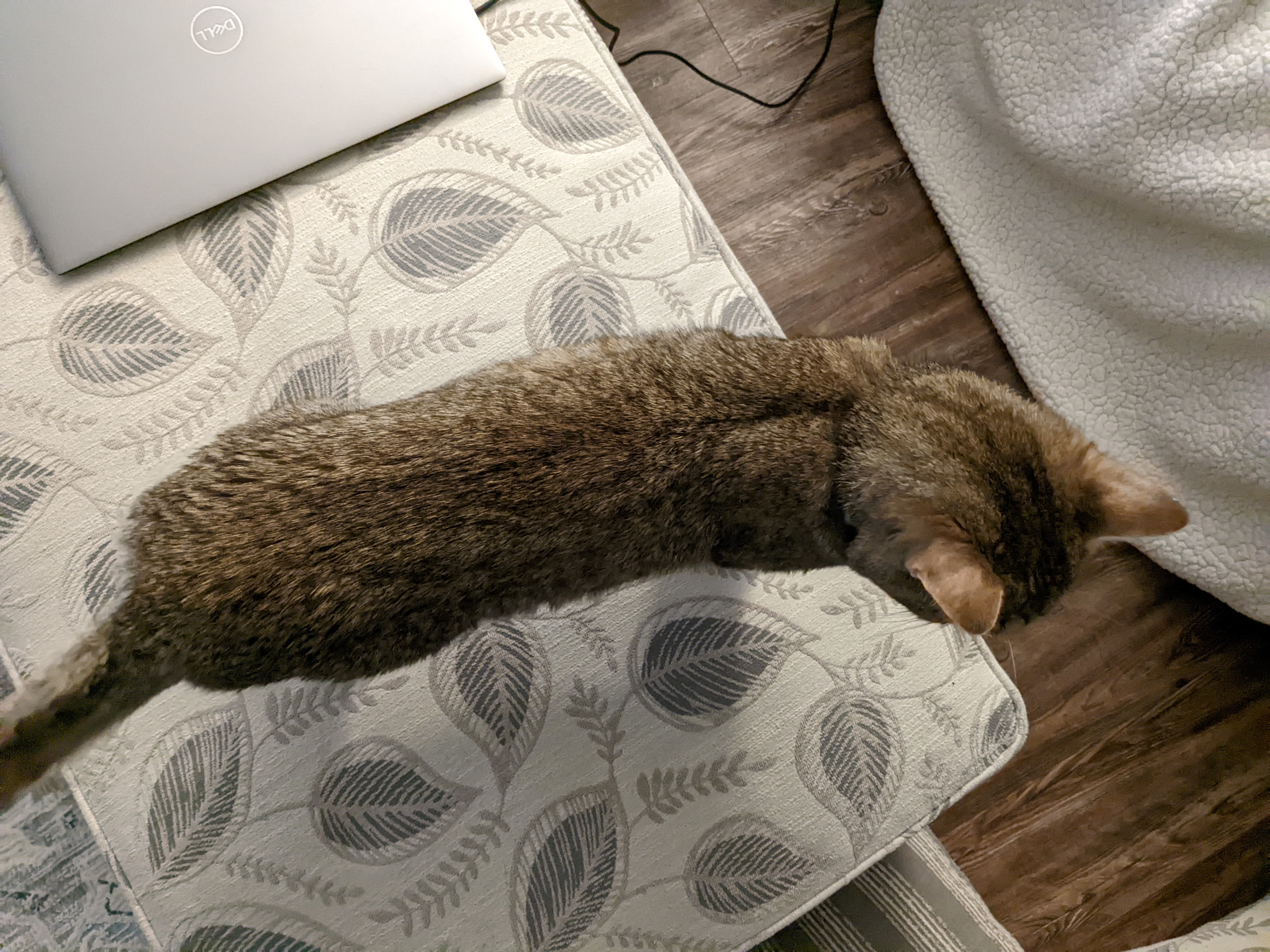
And he was more spry too. He couldn't run laps around the place yet, but he was excited about eating again, and would walk around on his own. It's amazing how quickly this medicine started addressing symptoms.
This was just the first of twelve long weeks of treatment. Throughout this time, we would be frequently engaged with FIP Warriors on Jerry's condition as we administered treatment. Every month, we would need to get a blood test for a local veterinarian to monitor his progress. Luckily, our local strangers had a veterinarian who was familiar with FIP that they recommended we see. Remember that there's no FDA approved treatment. Talking with a veterinarian about FIP was a risk on their part, so to know that someone was familiar with our situation was such a blessing.
The twelve weeks of treatment involved daily shots. The shots were anything but easy to give, and Jerry went through pain and aches to receive them. It wasn't easy for us to administer either. It was stressful for everyone.
My wife and I gave Jerry a shot every single evening. The veterinarian prescribed us to administer the medicine for 12 weeks, which is typical of FIP treatment. We had to inject 2 ml of liquid subcutaneously: under the skin, above the muscle. I think for most cats, especially our Ruby, this would have been easy to grab some skin. Jerry doesn't have much to grab. It was incredibly tight on his body.
Naturally, Jerry would squirm when we injected him. So my wife and I would have to lock him down, wrap him in a blanket so he couldn't move. Certainly, this made him more stressed. We did try to distract him with a Churu, which he would happily eat. But he could still feel the shot and would often scream out.
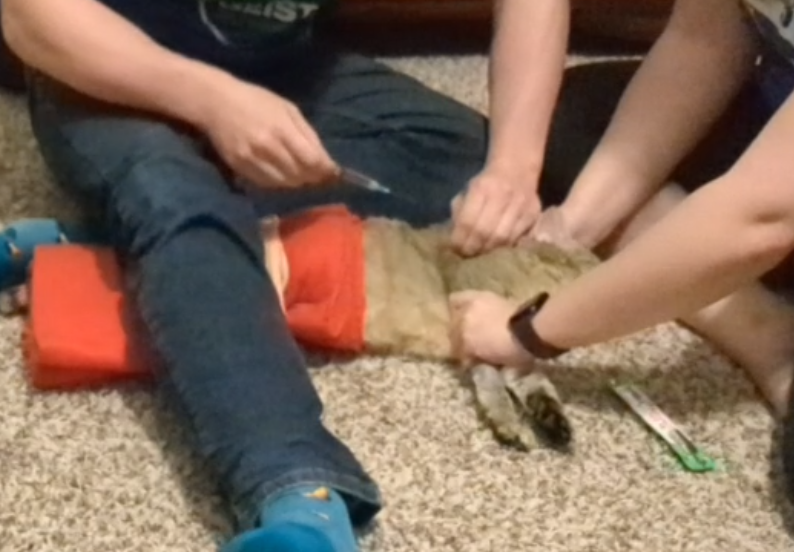
Perhaps the worst part, was how long it took to do the injection. 2 ml is a lot of liquid. It took some time to actually push the liquid in. All that time he could squirm and scream and sometimes it forced me to back out, and have to prick him again. All the shots wear on his skin, so I'd have to cycle between a few spots on his upper back and shoulders. Every time I'd back out would be less time for the next spot to heal before I had to use it again.
This was a nightly ritual. Some days were easy, others were incredibly stressful. We'd pin him down, grab some skin...and I couldn't quite find the right spot. I'd let him go and we'd have to try again. Some days I pushed the needle too far, and damaged some muscle. Some days I didn't go far enough (or went through the other side of the pulled skin) and the medicine would ooze on his skin, which left bare spots you can still see on his fur today.
New Symptoms
In the middle of treatment, we went out of town and changed treatment to pills for the week we were gone. Giving the shots was just far too difficult to expect our families to administer. After watching an instructional video we made, recording our treatment of Jerry, it was clear this was too much to ask. Pills made it far easier for our family to take care of him.
Sadly, soon after we got back, Jerry started showing new symptoms. His third eyelid was sometimes showing, and his eyes were asymmetrically dilated: called anisocoria. The veterinarian said this was the result of Horner's syndrome, likely just a side effect of FIP.
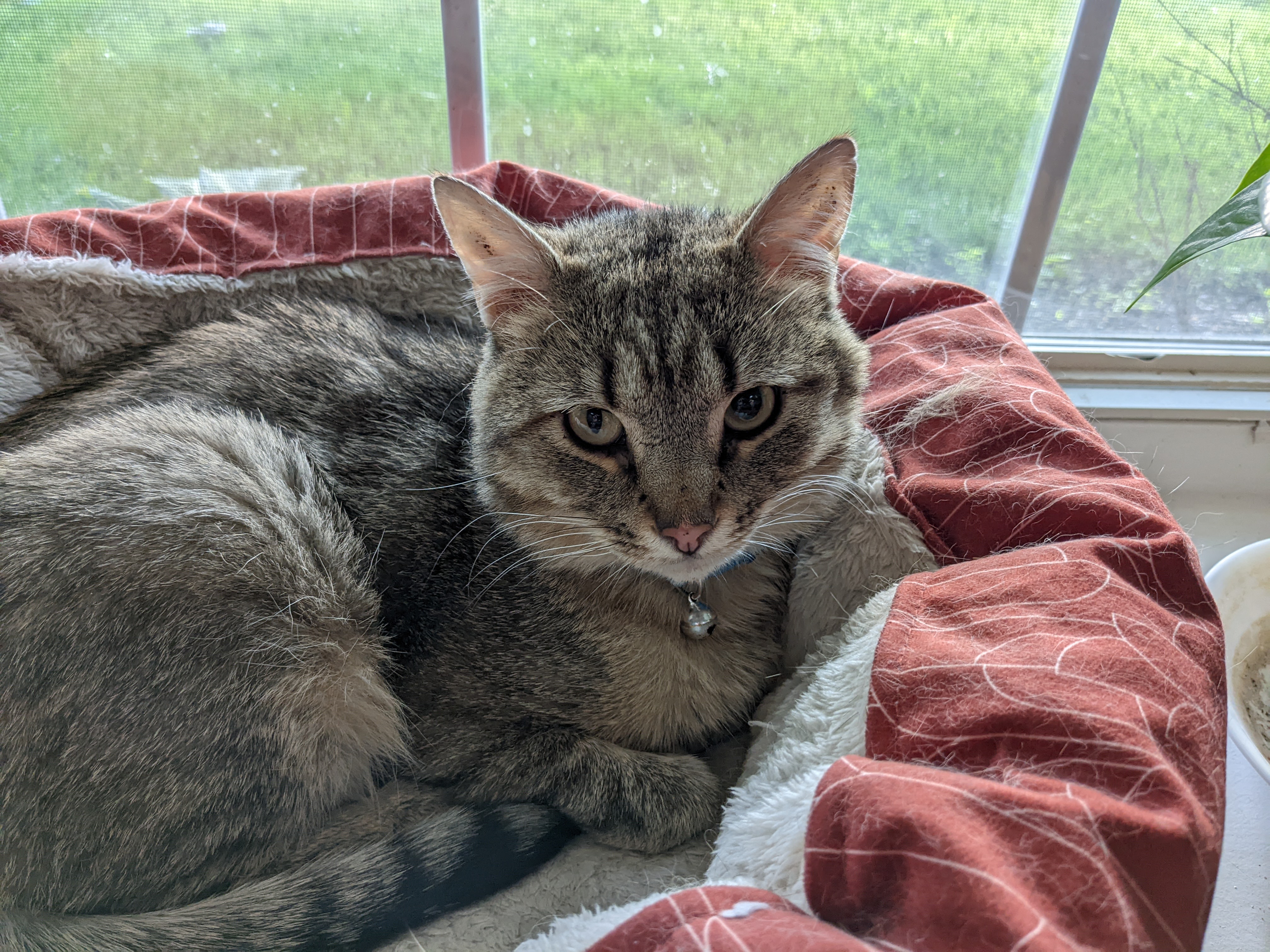
On top of that, Jerry was hit or miss on finishing is food bowl. This was similar to how he behaved before the treatment started.
These new symptoms made our veterinarian worry about the volume of our dosage. New symptoms meant that the medicine may not be taking, so it was suggested to increase our dosage by around 50%. You could always increase the dosage without harm, but not using enough means that the symptoms could return after the treatment window, and you'd have to start all over again.
This meant we were going from 2 ml of liquid per shot to 3 ml. What an unbelievable difference that makes in the difficulty of administering shots! Now it would take even longer to drive the liquid in, and even harder for Jerry to sit and take it.
Not only that, but now our treatment length was extended. They recommend at least 8 weeks on any new dosage amount, and we were already at 8 weeks. So instead of the original 12 week timeline, we now were giving medicine for a full 16 weeks.
The Final Shot
Unfortunately, we ended the shots earlier than our prescribed date. We had to resort to pills thereafter. Pills were much more expensive, which was why the pills were previously only used for when we traveled and had caretakers give him medicine.
When you give the shots, there is a chance you hit a blood vessel. You check this by pulling back on the syringe after you penetrate the skin. If you pull back and see blood, you're in the wrong place. Unfortunately, I was never able to get my hand around these plastic syringes the right way to pull back on them with one hand (the other hand was holding his skin, my wife was holding his head and feeding him.) It takes a lot of pressure to pull back the syringe to properly check. So I often wasn't able to do this check, or did it poorly.
One evening, I gave him his shot, and when I finished and pulled it out, he fell to the floor, and starting rapidly kicking his legs. He was seizing. It was one of the scariest moments, because I had thought I was killing him. He eventually stopped, and came to, just dazed. The trip to the local veterinarian the next day revealed nothing wrong with him. My conclusion is that I pushed all 3 ml of medicine in his bloodstream, and when it got to his brain, he seized.
In fear of possibly messing up again, we switched to pills. We still had another 4 weeks left. It was going to be an unexpected price bump, but both the risk of administering the medicine incorrectly and the incredible stress it put on us and Jerry, would be gone. The final weeks of treatment were uneventful, luckily.
Cost
For anyone else considering treating their pet for FIP, I think it's important to know how expensive this all can be. I'd like to share precisely the costs we paid for treating Jerry. I was given a $2,000-$5,000 estimate on price. It was going to be in the middle range of that because Jerry's symptoms were relatively mild at the start. But from our extended treatment, the doubling of the dosage, and switching to pills, costs for medicine got more expensive throughout treatment. Plus, we had additional local vet visits after discovering Horner's syndrome and then after the seizure.
| Item | Cost ($) |
|---|---|
| Local Vet Visits | |
| - Initial Emergency Vet | 600.00 |
| - New Local Vet | 110.55 |
| - Checkup for Horner's Syndrome | 78.50 |
| - Checkup after Seizure | 71.50 |
| Medicine | |
| - Vials and Pills | 4956.42 |
| - Gabapentin (Pain Relief) | 126.72 |
| Medical Supplies (syringes, needles, etc.) | 131.77 |
| 5 Additional Blood Tests | 869.75 |
| Total | 6945.21 |
Despite how much easier pills would have been, they are far more expensive than the vials plus the medical supplies for administering it. Prices would change by brand and might change over time, but at the time it was about $80 for a vial of liquid medicine and $7 per pill.
- We started at 2 ml per injection per day, that's around $16.00 a day.
- When we went out of town for a week, we gave 4 pills at a time for $28.00 a day.
- When we increased the dosage to 3 ml, it became $24.00 a day.
- When we permanently switched to pills on the new dosage, it was 6 a day for $42.00 a day.
Increasing the daily cost by 2.5 times the original amount was definitely unexpected, and not the impression on how much this could cost. So the biggest advice I can give is that you don't know how treatment will go: special doctor's visits or increased dosages or a change in brand.
Of course, it's hard to complain knowing that we were able to save our cat after so much love and care from all the people involved: me and my wife, the volunteers of FIP Warriors, our local veterinarians, and of course our local strangers that got us our first batch of medicine. What's not included in the costs above was a batch of free medicine that was sent to us by our FIP Warriors veterinarian after our dosage increased. It's amazing the generosity of the volunteers on FIP Warriors.
Passing it On
Sometime after we treated Jerry, that same family member reached back out to me about one of their friends in a similar situation. Her cat had been diagnosed with FIP, and we might be able to help. Luckily, we had leftover vials of medicine sitting in our fridge.
While I was out of town, my wife invited the FIP cat owner to our home. She instructed her on how to administer the shots and told a bit of Jerry's story. She left with syringes, needles, and all the medicine we had left.
Just like those before us, we were able to kickstart another cat's treatment. Her cat has also been fully cured.
The Future for Treatment
FIP Warriors has had to work underground, because veterinarians could not suggest treatment, because there was no FDA-approved medicines. Talking about FIP treatment was a risk to their license to practice animal care.
On June 1 2024, Stokes Pharmacy is the first US pharmaceutical to announce an FDA approved FIP treatment. I'm not an expert, and I've been unable to get a good grasp on exactly what this means for veterinarians. But steps are being taken to help make treatment and eventually a cure available in the United States.
Out of ignorance or fear of losing their license, the original after hours pet hospital suggested that Jerry was a goner, and offered to have him put down. How unfortunate the number of people that did go through with that advice, certain there was no other way.
Jerry the Race Car Driver
After our extended treatment, I'm happy to say that the treatment was a success. It's been 2.5 years since Jerry's treatment, and he's a spry and goofy cat just like you'd expect. I'm so grateful that my wife suggested we take Jerry home for the weekend after his diagnosis. To think that I was going to be one that had him put down, and I wouldn't have had all the joy from him these past years, and for many more years to come.
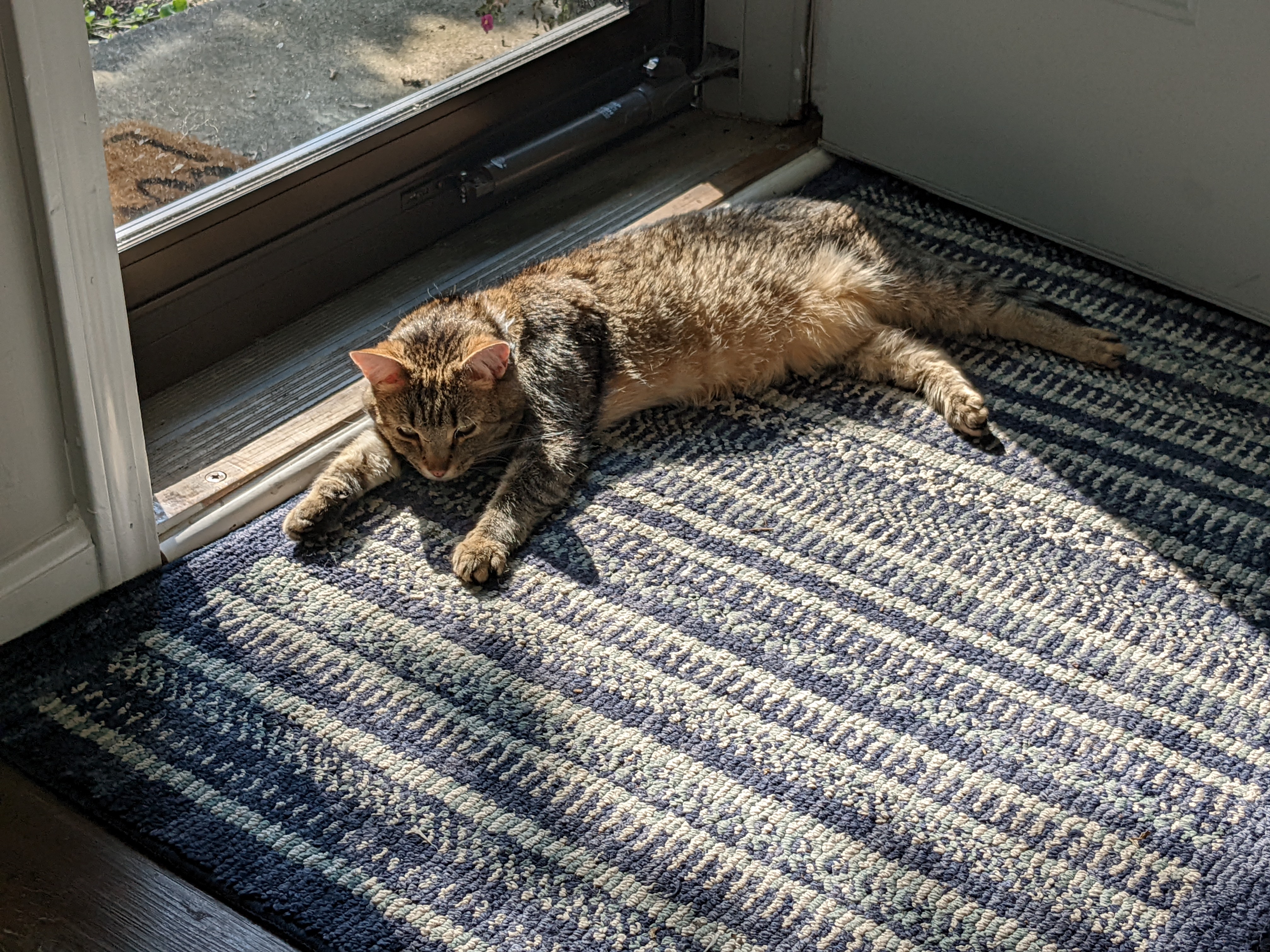
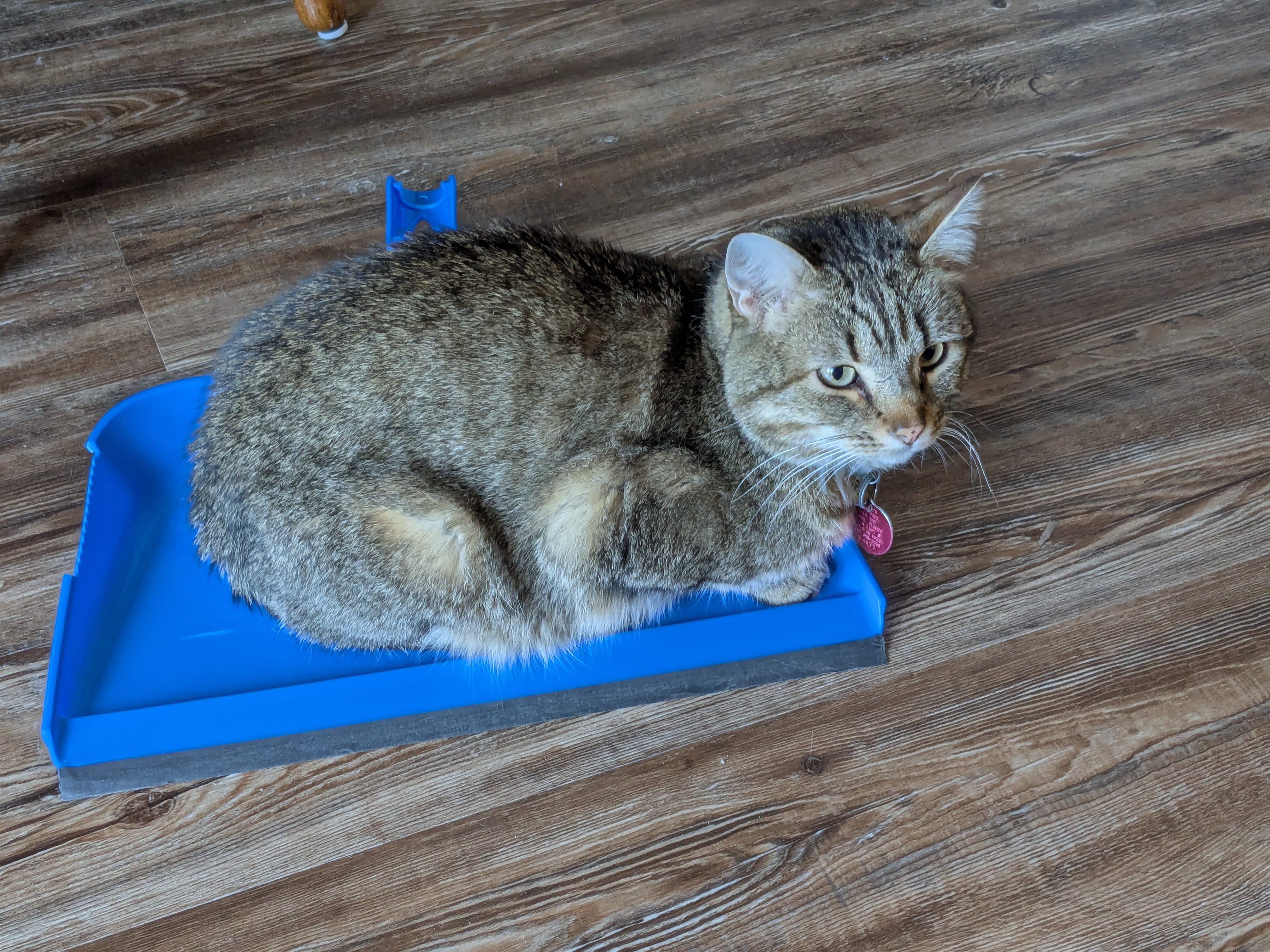
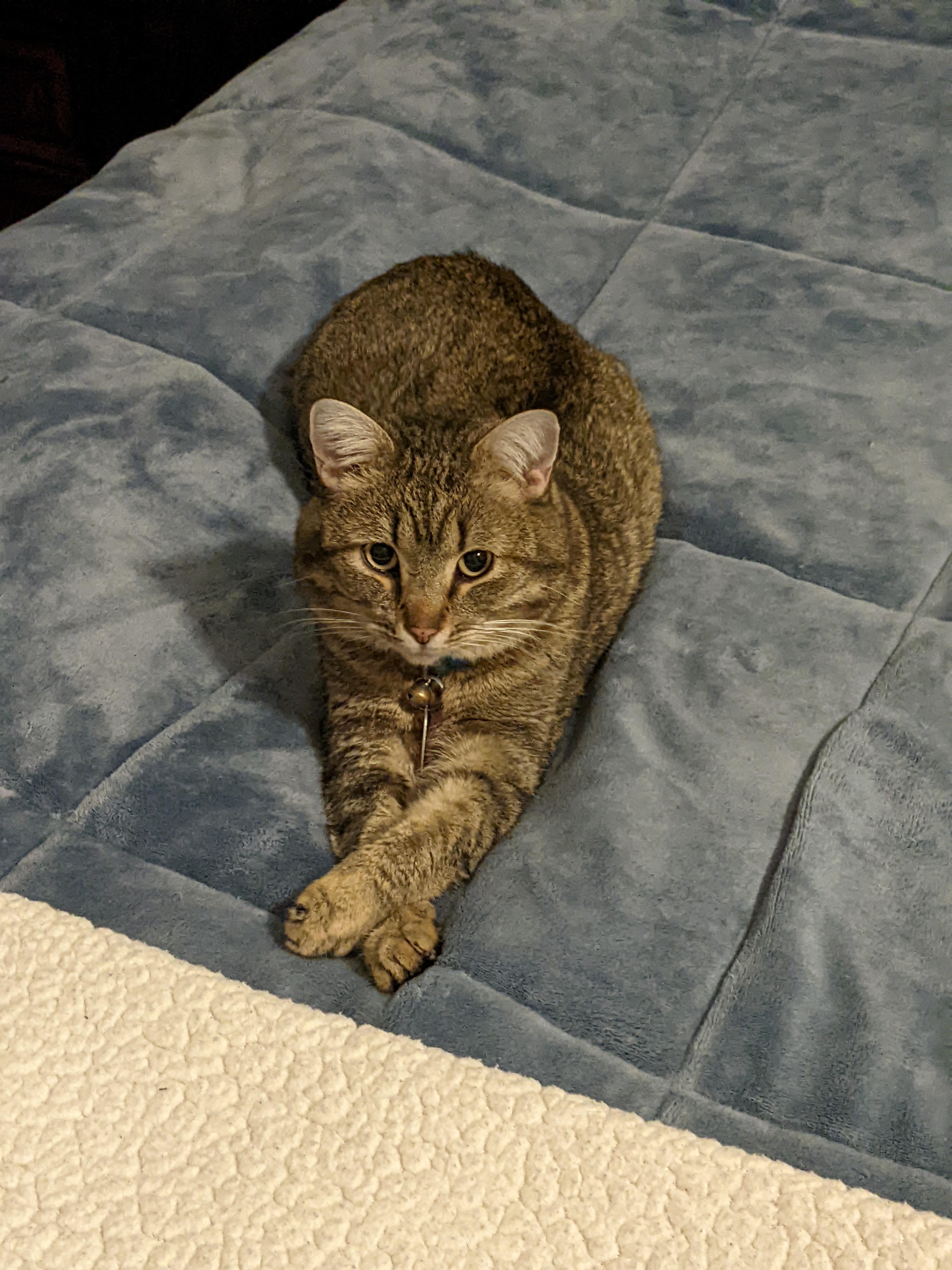
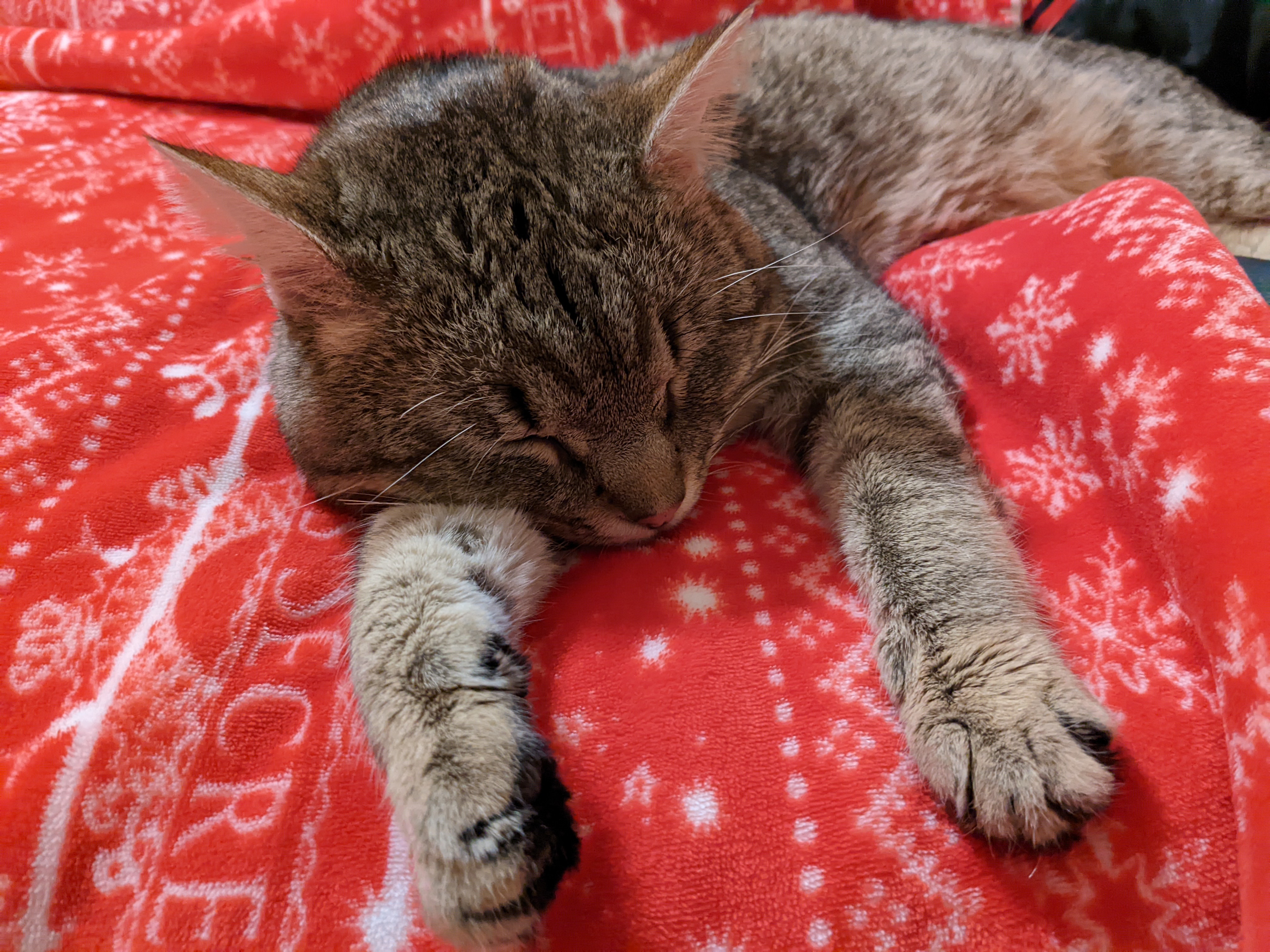
I hope this gives some insight into treating a cat with FIP. If you get the diagnosis, don't give up hope! Your cat can be saved!